- Feeding Acetyl-L-Carnitine to Horses: Discover The Benefits - November 14, 2024
- Protect against White Line Disease in Horses - October 10, 2024
- Mycotoxins and the Horse - April 1, 2023
Acetyl-L-Carnitine (ALCAR) is gaining attention in the equine world as a supplement with promising benefits. Horse owners are continually seeking ways to optimize their horses’ performance, health, and overall well-being, and ALCAR may offer a valuable addition to their feeding regimen. But what is Acetyl-L-Carnitine, and how can it support your horse?
What is Acetyl-L-Carnitine for Horses?
L-carnitine is a compound found in the horse’s body. It is essential for energy metabolism. Two essential amino acids, lysine and methionine serve as primary substrates for its biosynthesis. Interestingly analysis of the nutritional and mineral amounts in forage, commonly found in Europe and the UK, indicates that methionine and lysine are often short due to incorrect ratios between sulphur and nitrogen.
It stands to reason then that this important compound might well be short in the diets of certain horses and needing to be supplemented through the addition of acetyl-L-carnitine in the horse’s daily diet.
L-carnitine is synthesized in the horse’s liver, kidney and brain. Carnivores and omnivores as meat eaters, have a rich dietary source of carnitine from animal products but herbivores, like horses, must make their own supply.
L-carnitine is very important for transporting fats, to be used as fuel, from the cytoplasm of cells into the mitochondria. Acetyl carnitine plays a crucial role in fat metabolism and energy production, which is vital for muscle function, stamina, and overall vitality. ALCAR also has unique properties, such as crossing the blood-brain barrier, making it beneficial for neurological health and mental focus.
Mitochondria are the cell’s power producers. They convert energy into forms that are usable by the cell. This short video will help you understand more about mitochondria.
Introduction to Acetyl-L-Carnitine
Acetyl-L-carnitine (ALCAR) is a naturally occurring amino acid derivative that plays a crucial role in energy production, particularly in the brain and nervous system. Synthesized in the body from the amino acids lysine and methionine, ALCAR is also available as a dietary supplement. This compound is essential for transporting fatty acids into the mitochondria, where they are oxidized to produce energy. Beyond its role in energy metabolism, ALCAR has been shown to support metabolic health. By incorporating acetyl l carnitine into their diet, horses can potentially experience improved overall vitality and performance.
How Acetyl-L-Carnitine Works
ALCAR operates by boosting the body’s energy production, particularly within the brain and nervous system. It achieves this by efficiently transporting fatty acids into the mitochondria, the cell’s powerhouse, where these fatty acids are oxidized to generate energy. Additionally, ALCAR possesses antioxidant properties that help protect against oxidative stress and inflammation, which are common issues in high-performance horses. By supporting the health of neurons and other brain cells, ALCAR can improve cognitive function and potentially reduce the risk of neurodegenerative diseases. This dual action of transporting fatty acids and providing antioxidant support makes ALCAR a valuable supplement for maintaining optimal health and performance in horses.
Several research papers discuss the effects of Acetyl-L-carnitine (ALCAR), though specific studies on horses are limited. Below is a synthesis of relevant findings:
Evidence:
- Energy Metabolism and Performance in Endurance Horses: A study investigated mitochondrial fatty acid β-oxidation in endurance horses, revealing significant increases in mitochondrial function and fatty acid oxidation during long-distance exercise. This highlights the role of ALCAR in supporting energy metabolism in high-performance equine activities (van der Kolk et al., 2020).
- L-Carnitine Effects on Fitness and Oxidative Stress in Trotter Horses: Supplementing horses with L-carnitine (related to ALCAR) improved lipid metabolism and oxidative stress markers, suggesting potential benefits in performance and recovery (Trombetta & Falaschini, 2003).
- Broader Context on Metabolic Benefits: Studies in other animals (e.g., rats) have shown that ALCAR supplementation improves mitochondrial function, energy metabolism, and oxidative stress. These effects, while not directly studied in horses, suggest potential parallels in metabolic benefits (Tanaka et al., 2004) and (Iossa et al., 2002).
- Anti-Oxidative and Recovery Support: ALCAR supplementation has been shown to enhance recovery and reduce oxidative stress in studies involving other animals, indicating possible applications for improving equine vitality and performance (Pesce et al., 2004).
What are the Benefits of Acetyl-L-Carnitine for Horses?
Supplementing acetyl-L-carnitine offers a multitude of benefits for horses, making it a valuable addition to their dietary regimen. One of the primary advantages is its ability to enhance exercise performance by increasing energy production, particularly during strenuous activities. This boost in energy can lead to improved endurance and reduced fatigue, allowing horses to perform at their best. Additionally, ALCAR supports heart health, which is crucial for maintaining overall vitality. Another significant benefit is its role in reducing the risk of equine metabolic syndrome (EMS), a condition that can lead to various health issues. By incorporating acetyl l carnitine into their diet, horse owners can help their equine companions achieve better health and performance outcomes.
- Supports Metabolic Response to Training: supplementation has been shown to support the metabolic response to training in athletically active horses. It helps in moderating the serum muscle enzyme release that normally occurs in early training and reduces exercise-related muscle pain.
- Protects Against Diseases: ALCAR can help protect against encephalitis caused by high blood ammonia in chronic liver disease.
- Enhances Muscle Function and Recovery: ALCAR is beneficial for horses in training, enhancing glycogen storage and protecting muscle fibers from damage, preserving their structure and function. Fatty acid oxidation plays a crucial role in energy metabolism and health conditions, impacting muscle function and recovery. It is also useful for horses at any stage of training that are showing nonspecific muscle soreness and tightness.
- Antioxidant Properties: ALCAR has antioxidant properties that may be of benefit to insulin-resistant horses. It can help control difficult cases and can also help with chronic laminitis pain.
- Supports Performance: ALCAR is used to support performance in horses in early training, improve muscle function in horses with stiffness/muscle pain, and improve the metabolism of horses with Equine Polysaccharide Storage Myopathy (EPSM).
- Helps with Neuropathic Pain: ALCAR has shown a clear benefit in different types of neuropathic pain in many species, including horses.
- Improved Fat Metabolism: By facilitating the breakdown of fatty acids, ALCAR helps optimize energy use, which can be particularly beneficial for horses needing weight management or undergoing conditioning programs.
- Aids in Detoxification: ALCAR is essential in the healthy processing of fatty acids as a source of energy, contributes to healthy endocrine balance, and aids in the detoxification of the most common environmental pollutants.
- Neurological Support: Acetyl-L-Carnitine’s ability to cross the blood-brain barrier contributes to improved focus, learning, and overall mental clarity, which can be advantageous for performance horses.
- Anti-Inflammatory Properties: Studies suggest that ALCAR may help reduce inflammation, providing relief for horses with joint issues or inflammatory conditions.
- Support for Metabolic Health: Horses prone to metabolic disorders, such as insulin resistance, may benefit from the supplement’s role in energy regulation and its antioxidant effects.
EPSM, AMPK, Fatty Acid Oxidation and Acetyl-L-Carnitine
Acetyl-L-carnitine can activate an enzyme called AMPK. AMPK is the master metabolic regulator in cells. The role of AMPK in regulating cellular energy charge places this enzyme at a central control point in maintaining energy homeostasis.
This is why Acetyl-L Carnitine is a helpful supplement for horses with EPSM (Equine Polysaccharide Storage Myopathy). EPSM horses have a genetic mutation in an enzyme, glycogen synthase 1, which causes this enzyme to be more active than normal. This results in abnormal glycogen levels in the muscle cells. These horses have fewer mitochondria so they need a very stable supply of glucose for the cells to function.
Turning on AMPK stimulates the production of mitochondria, encourages the burning of fats and directs glucose away from glycogen formation and to the mitochondria to be burned. Standard treatment for EPSM horses is using high levels of fat in the diet, however, this can be harmful over a period of time as high-fat diets in horses have been shown to increase the chance of the development of insulin resistance and laminitis.
The supplementation of just 10 grams of acetyl-L-carnitine per day for a 500 kg horse has been found to improve symptoms so that fat in the diet can be reduced or eliminated, apart from the inclusion of omega-3 fatty acids from linseed during the winter or for horses not on green and growing pasture.

Performance Horses and Acetyl-L-Carnitine
The fact that forage analysis reports often show low levels of the components needed for L-carnitine synthesis may mean that many performance horses in moderate to heavy work, or just starting training, will benefit from the inclusion of this compound in their diet.
Intensive exercise greatly increases the demand on muscle tissue to produce energy from glucose, stored glucose (glycogen) and fat. Acetyl-L-carnitine will help the horse adapt to training more quickly, and reduce muscle soreness and stiffness allowing quicker recovery times.
Many of the benefits are likely to be due to the higher acetyl-L-carnitine levels that result when L-carnitine is supplemented. The effects of acetyl-L-carnitine in increasing the flow of fuels to the mitochondria and encouraging the production of mitochondria are also effects of training.
Insulin Resistance and Acetyl-L-Carnitine supplementation
The support in IR horses and ponies can be shown by reduced crest size and the reduction of abnormal fatty deposits, although of course, other management of horses like this is extremely important.
An additional benefit that has also been documented, has been the way L-carnitine naturally helps the body with the neuropathic pain which often accompanies cases of chronic laminitis.
Managing Neuropathic Pain in Laminitic Horses
Neuropathic pain is where the nervous system has changed so that it fires inappropriately, becoming highly sensitive to any stimuli. Supporting the body in managing this kind of chronic pain has been observed, in people, to be highly successful with L-carnitine supplementation.
In horses, feeding L-carnitine is one method that can help recovering lamintics by encouraging natural nerve regeneration and supporting the body’s ability to block painful stimuli.
Evidence:
- Analgesic and Neurotrophic Effects: Acetyl-L-carnitine (ALCAR) provides neuroprotective, neurotrophic, and analgesic effects in peripheral neuropathy. Its effects include promoting nerve regeneration, reducing pain, and modulating neurotrophic factors like nerve growth factor (NGF) (Sarzi-Puttini et al., 2021).
- Chronic Pain and Neuropathies: ALCAR shows potential in treating chronic neuropathic pain due to its ability to induce epigenetic changes that enhance pain-regulating receptor expression. Studies on diabetic neuropathy, HIV-induced neuropathy, and chemotherapy-related neuropathies highlight its benefits (Onofrj et al., 2013).
- Mechanisms in Pain Relief: ALCAR supplementation has been linked to improved nerve function and pain reduction through neuroplasticity and mitochondrial support. It activates metabotropic glutamate receptors (mGlu2), contributing to its long-term analgesic effects (Chiechio et al., 2007).
- Efficacy in Diabetic Neuropathy: Systematic reviews demonstrate that ALC significantly reduces pain in diabetic peripheral neuropathy and enhances nerve conduction, suggesting its utility in nerve repair and pain relief (Veronese et al., 2017).
- Synergistic Effects: Combining ALC with other compounds, such as Palmitoylethanolamide (PEA), has shown superior pain relief and anti-inflammatory effects in neuropathies linked to autoimmune diseases (Parisi et al., 2021).
- Peripheral and Central Mechanisms: Studies indicate that ALC mitigates peripheral nerve damage and central nervous system sensitization, offering relief for various forms of neuropathic pain (Vivoli et al., 2010).
L-carnitine and its derivative ALCAR are supported by evidence as effective interventions for managing chronic neuropathic pain, with mechanisms involving nerve regeneration, neurotrophic factor modulation, and mitochondrial function enhancement. These findings although linked to human research suggest promising therapeutic applications for horse neuropathy-related pain conditions.
Managing Glucose Tolerance in Equines
L-carnitine has been documented to improve glucose tolerance/insulin resistance in ponies. A review and meta-analysis of multiple studies on L-carnitine supplementation highlights its effects on various health outcomes such as weight loss, insulin resistance, and infertility, emphasizing the importance of systematic reviews in providing comprehensive insights from randomized clinical trials.
Increased plasma leptin through l-carnitine supplementation is associated with an enhanced glucose tolerance in healthy ponies. J Anim Physiol Anim Nutr (Berl). 2009 Apr;93(2):203-8. doi: 10.1111/j.1439-0396.2008.00807.x. Van Weyenberg S, Buyse J, Janssens GP.
Source Ghent University, Merelbeke, Belgium. Stephanie.VanWeyenberg@Ugent.be
Abstract In this study 0 or 4 g of l-carnitine was supplemented for 7 days in a cross-over design of six healthy ponies to modulate glucose metabolism and leptin production.
At the end of each period, serial blood samples were taken to measure glucose and insulin response, leptin, triglyceride (TG), non-esterified fatty acids (NEFA) and creatine phosphokinase. l-carnitine supplementation was associated with a decrease in postprandial plasma glucose and insulin concentration, indicating an enhanced glucose tolerance. In contrast, postprandial plasma leptin concentration was increased when l-carnitine was supplemented.
Yet, this increase in leptin concentration was not preceded by an increase in insulin concentration, suggesting that other factors apart from plasma insulin concentration could influence plasma leptin concentration. Although NEFA and TG were not significantly influenced by l-carnitine supplementation under these experimental conditions, further research must clarify whether net TG synthesis might be responsible for this increase in leptin.
Feeding ALCAR to Horses
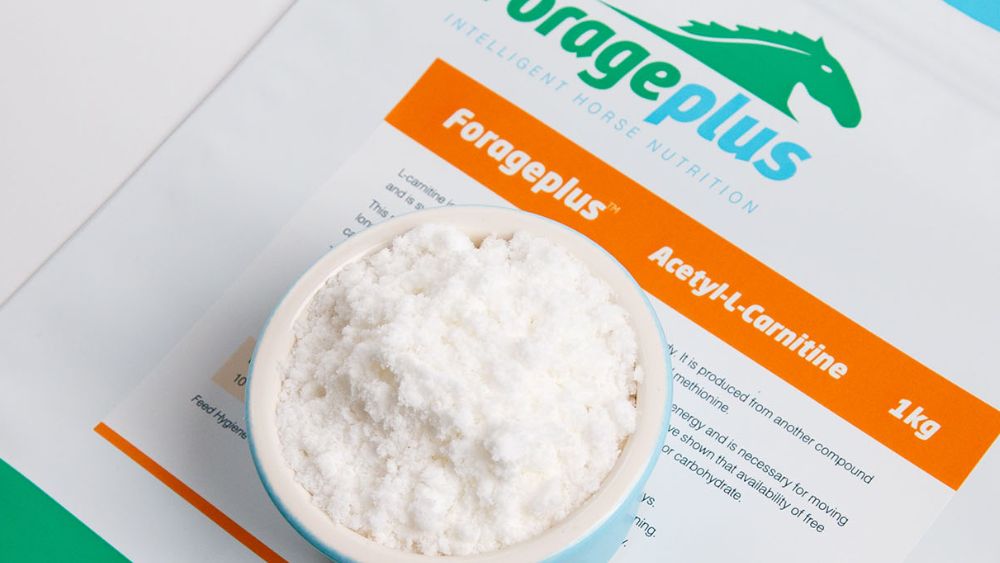
Acetyl-L-carnitine is a white crystalline solid that resembles snow. It has a mild odour similar to vinegar. Humans react differently to the taste. To me, it is “tart”. Horses very rarely object to having it added to their feed. Side effects are extremely rare. Mild bloating has been reported on occasion and disappears by splitting the daily dose between two meals. The recommended feed rate of Acetyl-l-carnitine (ALCAR) for horses varies depending on the specific condition of the horse and its weight.
Fatty acid oxidation plays a crucial role in energy metabolism, with carnitine transporting long-chain fatty acids into mitochondria.
In this study conducted with Standardbreds in training 10 grams per day was recommended. However, a commonly suggested dosage is 1 gram per 45 kg of body weight. This dosage can be given once or twice daily in the feed. It’s important to note that the dosage should be adjusted under the guidance of a veterinarian or a horse nutrition expert.
Are there any Side Effects of Carnitine Supplementation in Horses?
Feeding Acetyl-l-carnitine (ALCAR) to horses is generally safe and side effects are extremely rare. However, mild bloating has been reported on occasion. This usually disappears by splitting the daily dose between two meals.
In some cases, it may cause gastrointestinal upset. As with any supplement, it’s important to monitor the horse’s response and consult with a veterinarian if any adverse reactions are observed.
Horses accept this supplement well in their daily feed with it being rare for them to object to it.
When to Feed Acetyl-L-Carnitine
The timing and decision to use Acetyl-L-Carnitine supplementation depends on the specific needs of your horse. Here are some scenarios where ALCAR supplementation may be beneficial:
Weight Management: Overweight horses can gain from enhanced fat utilization as part of a balanced feeding program.
Performance Horses: To support energy demands during training and competition while improving recovery times.
Senior Horses: For maintaining muscle tone, mental sharpness, and metabolic balance.
Metabolic Concerns: Horses with insulin resistance or prone to laminitis may benefit from its regulatory effects on energy metabolism.
How to Feed Acetyl-L-Carnitine to Horses
- Determine the Right Feed Rate: Consult with Forageplus or an equine nutritionist to establish the appropriate feed rate based on your horse’s weight, activity level, and health status. Typical dosages range from 10-20 grams per day, but this can vary.
- Mix with Feed: ALCAR is available in powder form and can be easily mixed into your horse’s daily feed. Ensure even distribution to prevent wastage.
- Introduce Gradually: Start with a lower dose and gradually increase to the recommended amount. This helps your horse adapt and minimizes the risk of digestive upset.
- Monitor for Results: Track changes in crest size, energy, performance, and overall health to evaluate the supplement’s effectiveness.
Conclusion
Feeding Acetyl-L-Carnitine to horses offers a range of benefits, from enhancing energy metabolism to supporting mental clarity and muscle recovery. Whether you’re managing a performance horse, a senior equine companion, or one with metabolic challenges, ALCAR can be a valuable tool in your nutritional tool kit. With proper guidance and consistent monitoring, this supplement could be a game-changer for your horse’s health and performance.
For the latest articles on Horse Health, take a look here.
Last Updated on December 9, 2024 by Forageplus Team